Research on digital platforms consistently shows that user experience often shapes behavior more strongly than reward systems alone. Findings from PwC Global Consumer Insights Survey have repeatedly highlighted that trust, convenience, and overall experience influence how people interact with online platforms across different industries. Similar patterns increasingly appear in gaming environments where players evaluate experiences through factors extending beyond numerical outcomes.
One challenge in discussing quality within digital gaming environments is the tendency to define value only through visible rewards or statistical outcomes. Discussions around the best murder mystery 2 betting experience often begin with item values, reward structures, or probability mechanics. However, reducing player preferences to those elements creates an incomplete picture. User behavior research suggests that people frequently return to platforms because of how they feel while using them rather than because of a single measurable result.

The Problem With Measuring “Best” Through Rewards Alone
Reward systems naturally attract attention because they provide clear and measurable information. Numbers are easy to compare. Users can evaluate percentages, item values, or outcomes quickly. Yet human behavior rarely follows purely mathematical patterns.
Gaming researchers have long observed that participation choices often involve emotional and social influences. The American Psychological Association has discussed how user engagement in digital environments may be affected by feelings of connection, familiarity, and perceived fairness.
This creates a gap between measurable outcomes and actual player preferences. Two environments may offer nearly identical reward structures while producing very different user reactions. One may feel confusing or stressful, while another feels comfortable and easy to understand.
When people describe a positive experience, they frequently reference ideas such as:
- Ease of navigation
- Clear information presentation
- Trust in systems and processes
- Sense of community interaction
- Consistency of user experience
- Transparency in platform mechanics
These factors are harder to measure than reward percentages, yet they often shape long-term behavior.
How Player Priorities Extend Beyond Outcomes
People entering digital gaming spaces often have different motivations. Some enjoy competition. Others value social interaction. Some simply seek entertainment during free time.
Research from McKinsey & Company consumer behavior studies suggests that modern users increasingly expect personalized and friction-free experiences from digital services. Expectations built in one area often influence behavior in another.
As a result, players may judge gaming environments according to broader experience standards.
For example, loading speed may seem unrelated to rewards at first glance. Yet delays create interruptions that affect attention and satisfaction. Complex navigation systems can increase frustration regardless of available outcomes.
Similarly, users may value an environment that feels organized and predictable. Clear instructions reduce uncertainty and help people understand actions without unnecessary confusion.
Discussions around preferred MM2 gaming experiences increasingly reflect these broader considerations. Rather than focusing entirely on outcome potential, many users discuss whether systems feel understandable and reliable.
Trust as a Core Experience Factor
Trust repeatedly appears as one of the strongest influences in digital platform behavior. Users often evaluate trust through small signals rather than major features alone. These signals include interface clarity, visible rules, transparent processes, and predictable interactions.
Edelman Trust Barometer research has consistently shown that trust affects long-term engagement and perception across online environments.
In gaming ecosystems, uncertainty can create hesitation. Players may become cautious when processes appear unclear or inconsistent. Conversely, transparency often creates greater comfort even when outcomes remain uncertain.
Trust can emerge through:
- Clear explanations of systems
- Consistent platform performance
- Visible community standards
- Reliable account functionality
- Straightforward design structures
These details may appear small individually, but together they shape overall perception. Users frequently remember how an experience felt rather than recalling isolated technical details.
Usability Changes How Players Interact
Good usability often becomes invisible because people notice it only when it disappears. A confusing interface demands additional effort. Users spend mental energy searching for functions instead of focusing on interaction itself.
Nielsen Norman Group usability research notes that users typically prefer systems requiring minimal cognitive effort. Simplicity often improves satisfaction because it reduces friction.
This does not necessarily mean removing features. Instead, it means organizing information so people can understand it naturally.
Digital environments increasingly compete on user experience rather than feature quantity alone. A system with fewer complications may feel more comfortable than one containing excessive complexity.
As expectations evolve, players increasingly associate quality with usability standards that mirror broader digital experiences.
The Influence of Community and Social Environment
Gaming experiences rarely exist in isolation. Communities often shape perceptions just as strongly as platform structures.
People naturally observe the reactions and behavior of others. Positive discussion environments can influence feelings of trust and familiarity. Negative interactions may create hesitation. Similar behavioral patterns can also be seen in broader studies examining the psychology of gamified player retention, where repeated engagement often reflects emotional connection, habit formation, and user experience factors rather than outcome-based motivations alone.
Research from Pew Research Center studies on online communities suggests that social environments affect how individuals participate in digital spaces.
Community influence appears in several ways:
- Shared experiences between users
- Discussion of platform behavior
- Informal guidance and feedback
- Development of social expectations
- Perceived fairness within interactions
Over time, users may associate quality with community culture rather than outcome mechanics alone.
Evolving Expectations Across Digital Ecosystems
Player expectations continue to shift because digital experiences themselves continue changing. People interact daily with applications emphasizing speed, simplicity, personalization, and transparency. Those experiences create broader standards that influence future expectations.
As a result, definitions of quality within gaming spaces continue expanding. What users once accepted as normal may eventually feel outdated.
Reward structures remain part of the experience, but they increasingly exist alongside wider considerations involving trust, usability, and social interaction.
Responsible participation remains important in any activity involving uncertainty or wagering elements. Individuals should understand potential risks, maintain personal limits, and recognize signs of problematic behavior if participation begins affecting daily responsibilities or emotional well-being.
Conclusion
Defining quality solely through rewards creates an incomplete understanding of player behavior. Human decision-making rarely depends on a single factor. Comfort, clarity, trust, usability, and community often shape perceptions alongside measurable outcomes.
As digital ecosystems continue evolving, conversations surrounding preferred Murder Mystery 2 wagering environments may increasingly focus on experience design rather than numerical comparisons alone. The idea of an ideal MM2 gaming experience appears less connected to isolated rewards and more connected to how users feel while participating from beginning to end.



 Games of chance have attracted people for centuries because they combine uncertainty, anticipation, and the possibility of an unexpected outcome. Modern technology has brought many of these experiences into digital environments. Understanding why people find games of chance engaging can provide useful insight into gambling behavior and responsible participation.
 Casino online games are still being rolled out that have something to offer to both gamers with experience and to the newbies. There’s always a new game you haven’t played before to try, and it can be anything from modern slots to interactive table games. Playing new game titles can be thrilling, but with the proper attitude, gamers can revel in the experience responsibly and make fewer mistakes.
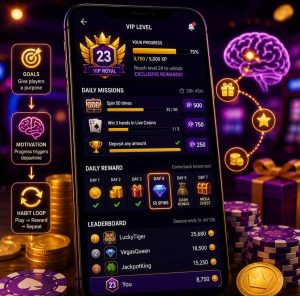 What used to be simple casino platforms built around slots and table games are now layered with features that look and feel more like video games. Progress bars, daily rewards, missions, and leaderboards are no longer optional extras. They are central to how modern casinos operate, especially in competitive markets like the UK, where new online casinos UK continue to push gamification as a core part of the user experience.



 Twitch and similar streaming platforms caused esports to boom all over the world. Notable additions are being made by casinos:
 Online blackjack could be just what you’re looking for if you love the excitement of a casino setting and the strategic difficulty of card games. This game is perfect for:







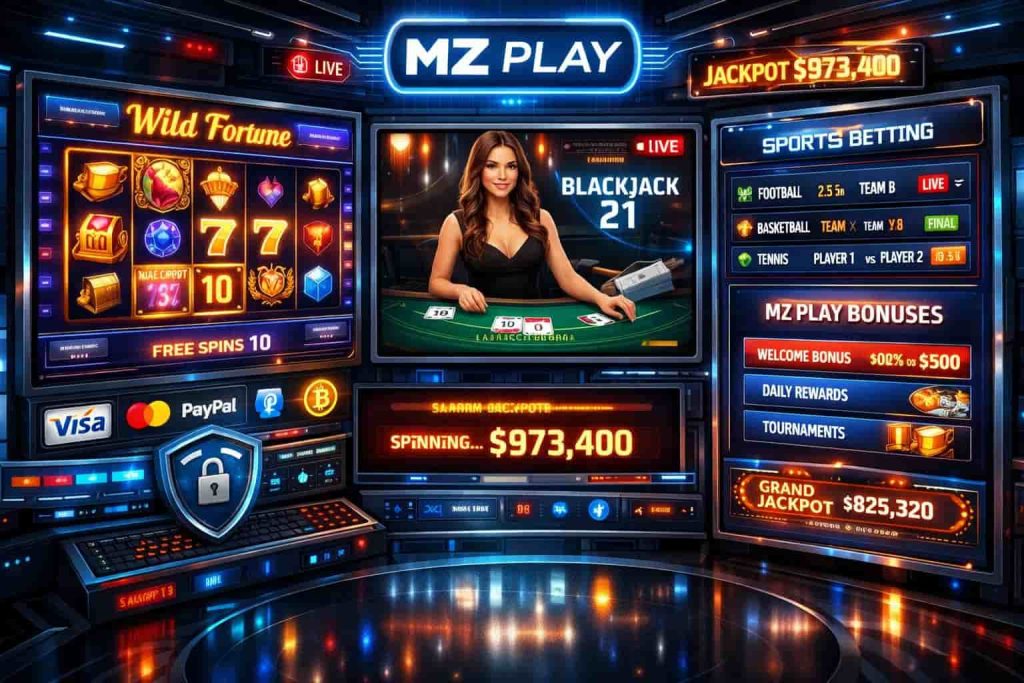


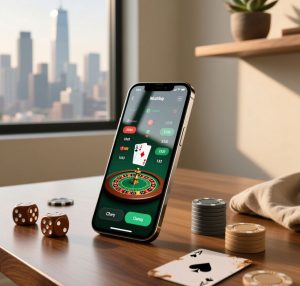







 Over 3.2 billion people worldwide play video games. This staggering number highlights a massive shift in entertainment trends, with younger audiences spending more time gaming than ever before. Online casinos have taken note of this change. Many platforms now design experiences that feel closer to gaming than traditional gambling. One standout example is 26M casino, which offers a hybrid game library combining elements of esports, arcade games, and slot machines. This strategy aims to capture the attention of a new generation of players.